
Hand-Crafted Healthcare Education
Craftsmanship vs Assembly Line
It’s easy to tell the difference isn’t it? Like the great violin makers of Cremona who limited their consignments and maintained an unparalleled dedication to craft and excellence, USA CME designs and builds CME curricula with a hands-on approach. Because, making something that will leave a legacy of lasting excellence is never a factory-floor product.
We believe CME must be created with enduring significance in mind — after all, what should last longer and take deeper root than the health, wellness, and clinical knowledge that resides in our communities? CME designed to leave such a legacy requires respect for the material, the clinicians, and the patients, as well as a belief that what is done well will find a discerning audience.

Needs-Assessed Educational Activities
Core curriculum, case-based vClinic® and Concordance Connections® educational activities.
Group Task
Educational Activities
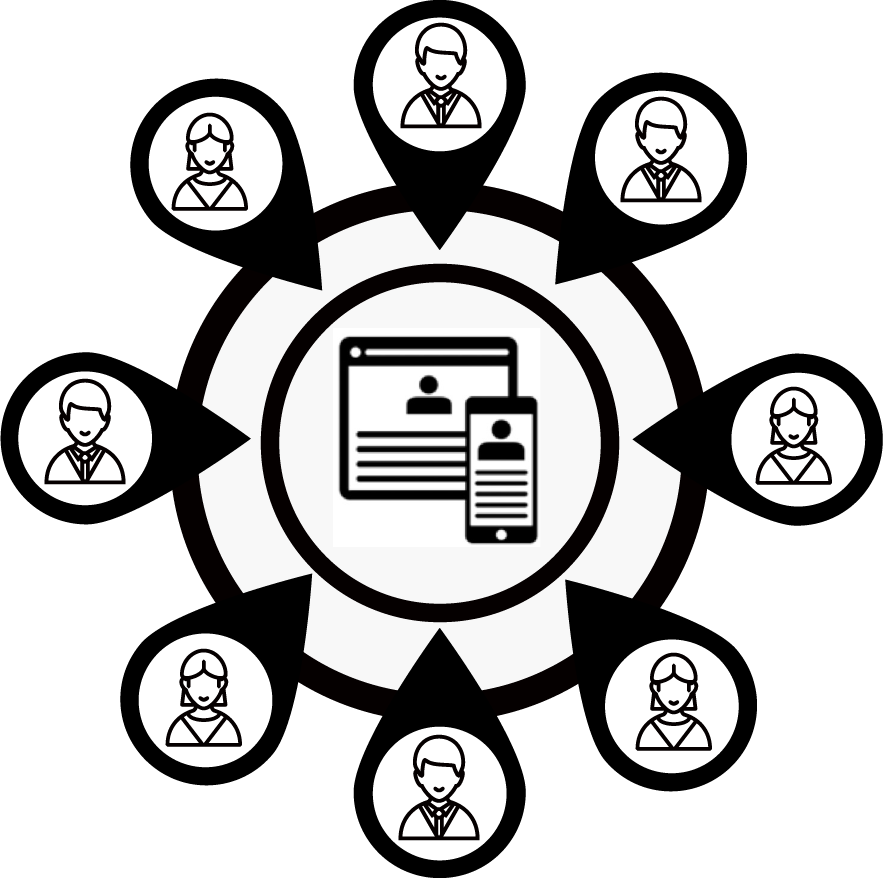
Collaborative, patient case building for Office-Hours™ learning activities

Faculty-Led
Office Hours™
Video classroom participation with instructional faculty. Review and discuss patient cases.
Personalized Online Education
Participative healthcare education. Join small groups of peer learners in dynamic collaborative medical education.
Hybridized Curriculum-Based Learning
Great CME isn’t an activity. Great CME is an ongoing process, a routine pursuit of mastery and continuous achievement. Since our goal is to inspire the highest level of CME learner achievement, we seek to deliver knowledge that translates into steadfast engagement of exceptional caliber. We have shown that hybridized curricula integrating proven standard formats with the most innovative learning designs in the industry – online and offline – (and the most sophisticated, individual-learner focused, knowledge management platform) delivers superior continuous engagement.
Explore USA CME™
Exceptional CME design is a fusion of art and science. We bring together renowned specialists in a range of fields including medicine, human behavior, and conversation/lexicon dynamics to share their expertise through artfully crafted activities that go beyond the run-of-the-mill norm.
USA CME specializes in comprehensive curricula such as Hyperkalemia and Health Outcomes and our MasterClass Series I programs; Migraine Masters and Menopause Masters. These curricula will include proprietary formats such as Symposia Highlights™, Mastery Assessment Programs or MAPs and v2v-act 2.0 Life Studies™. USA CME looks forward introducing three new formats to our USA CME Signature Line, including Patient-Activated CME™, CME-Activated PatientWellness™ and SharedDecision CME™.

vClinic is the next best thing to the examination room itself
CME that replicates the real-life clinical experience. Our courses are specifically designed for you to rapidly translate new information into meaningful action in the clinical setting and at the bedside.
vClinic features authentic interactive vPatient™ scenarios, Meeting Highlights and Mastery Assessment Programs (MAPs) presented as a complete curriculum.
USA CME courses are unique, challenging, and will bring out your competitive instincts.
Learn how the treatment of migraine is being transformed — An accredited CME program
Expect to be challenged by our migraine CME. Classify patients by migraine type and differentiate between migraine and non-migraine headaches and their treatments. Raise awareness of the limitations of step-care management models contrasting them with modern stratified care models.
Take patient demographics and characteristics into consideration with more patients when recommending migraine therapies.

Menopause and Sexual Health: An Update on Dysparenia and Female Sexual Dysfunction — An accredited CME program
Explore how the science of Intracrinology and DHEA relates to the physiologic, histologic and morphologic changes associated with menopause and treatment of dyspareunia / Vulvovaginal atrophy (VVA) / Genitourinary Syndrome of Menopause (GSM), and potentially Female Sexual Dysfunction (FSD).
ISSWSH 2019- State of the Art Session — It Takes Two to Tango
IIn 1970, Masters & Johnson established that “There is no such thing as an uninvolved partner in a marriage or relationship where sexual dysfunction exists.”
At ISSWSH in 2019, Stanley Althof, Ph.D. and Sheryl Kingsberg, Ph.D. presented the State-of-The-Art Session entitled "It Takes Two to Tango." Drs. Althof and Kingsberg reviewed the dynamic and reciprocal relationship of one partner’s sexual function, sexual satisfaction, physical and mental health to the other partner’s sexual health and satisfaction.
Through a series of virtual office visits, Drs. Althof and Kingsberg demonstrated how and why clinicians need to consider the impact of one partner’s sexual dysfunction on the other partner and how modern treatment planning can consider and successfully engage both partners.
ISSWSH 2019
—Research Podium Session 4 Presentation
Improving Practitioner Knowledge and Clinical Competence in Managing Menopause-Associated Dyspareunia and Female Sexual Dysfunction Through Educational Interventions
To address widespread knowledge and treatment gaps in the management of GSM, VVA, FSD and dyspareunia a two-part online CME curriculum entitled Menopause and Sexual Health: An Update on Dyspareunia and Female Sexual Dysfunction was developed based on a needs assessment survey that included literature reviews and practitioner interviews. 3,914 unique healthcare participants enrolled in the Menopause and Sexual Health curriculum with 1,074 (27%) completing the curriculum
Click below to review the findings from this educaional curriculum.
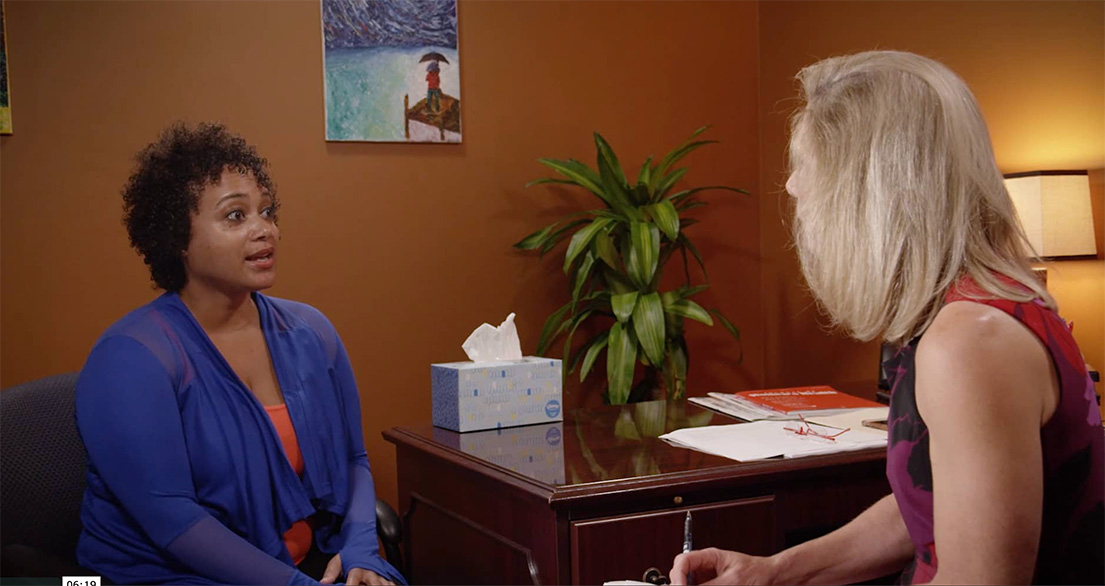
Hypoactive Sexual Desire Disorder (HSDD) Diagnostic Training Program
An HSDD diagnostic training program to improve learner competencies in indication-based clinical trial subject identification and selection was developed to train healthcare professionals to correctly assess potential trial subjects among women presenting with a chief complaint of low sexual desire.
Along with consultation from sexual health experts, a series of challenging potential HSDD scenario videos were developed. In these office-based videos, highly trained and experienced standardized patient actors were interviewed by a sexual health expert.
Each scenario is followed by possible diagnoses for learners to consider and select. Expert diagnostic commentary is then provided for each office visit along with a discussion of case-specific considerations and diagnostic pearls.
What Our Community of Learners Is Saying...
"This has been hands-down the most interesting, useful, and illuminating CME course I’ve done in a while."
"This presentation was excellent –– interspersing the material with activities and Q & A made the activity particularly engaging and I look forward to future USA CME programs."
"Very informative both from a disease-state perspective, as well as from the patient management/communication perspective."
"Excellent review…videos are terrific and real."
Learn more about USA CME™
Continuous, Integrated, Interactive, Measurable, Actionable Learning
Click below and send an email to USA CME™. Be among the first to learn about and register for on-line course offerings and continuing education programs.
Copyright © 2020. All Rights Reserved. USA CME, LLC